AP European History Guide
A comprehensive study tool for acing European history and getting a 5 on your exam
Absolutism, European Balance of Power
The European State System and Balance of Power
Topics Covered: Absolutism, Enlightened Despots, Balance of Power, Peter the Great, The Great Northern War
Absolutism in France
Absolutism is a form of monarchy in which the ruler’s authority is not limited by laws or a constitution. It was often justified by the doctrine of divine right, meaning kings ruled as God’s representatives.
Henry IV
A politique who issued the Edict of Nantes
Strengthened the monarchy, reduced debt, and weakened nobles (robe nobles)
Louis XIV (1643–1715)
Often considered the perfect example of absolutism. His reign is famous for:
The Fronde
Versailles
Wartime Policies
Bishop Bossuet, working under Louis, became the leading defender of divine right monarchy.
I. The Fronde (1643–1653)
After Louis XIII’s death, Cardinal Mazarin ruled as regent. Nobles tried to seize power during the Fronde rebellion. The experience traumatized young Louis XIV, motivating him to weaken the nobility and centralize authority.
II. Versailles (1661–1682)
Louis built Versailles to escape Paris and control nobles
It became a political trap — nobles lived under his watch
Symbolized order, power, and grandeur (Louis called himself the “Sun King”)
Supported by cultural figures like Racine, Molière, and Lully
Colbert (Finance Minister)
Mercantilism advocate
Wanted national wealth in gold/silver
Expanded manufacturing and shipping
Eliminated internal tariffs
Increased state revenue dramatically
Louvois (War Minister)
Grew the army to 400,000 men
Improved weapons, uniforms, fortifications
Louis used rivalry between ministers to strengthen his power.
Domestic Policies
Revoked Edict of Nantes (1685) — one million Huguenots fled or converted
Suppressed Jansenists
Fiscal mismanagement led to credit bubbles and debt crises
Cultural and Social Effects
Versailles reduced women’s political influence compared to Parisian salons
Centralization helped cause tension leading to the French Revolution
III. Wartime (1682–1715)
Louis XIV threatened the European balance of power. His expansionism alarmed England, the Dutch, and the Habsburgs.
War of the Spanish Succession (1700–1713)
When the sickly Charles II of Spain died without heirs, Louis and the Habsburgs fought over succession.
Treaty of Utrecht (1713–1714):
France: Kept Alsace; Louis’s grandson became king of Spain (but thrones cannot unite)
England: Gained Gibraltar, Balearics, and the profitable asiento (slave trade)
Austria: Gained Spanish Netherlands, Milan, Naples, Sardinia
Prussia: Brandenburg elector recognized as “King in Prussia”
Savoy: Gained Sicily (later swapped for Sardinia)
Was Louis XIV a success or failure?
Success
Strong leadership
Centralized rule
Cultural brilliance
Massive army
Administrative reforms
Versailles prestige
Increased revenue
Failure
Crushed peasants
Endless wars → debt
Failed military goals
Revoked Edict of Nantes
Poor economic decisions
Tax exemption for nobles
Weak heir
Louis XV
Regency under Duke of Orléans
John Law attempted economic reforms → Mississippi Bubble crash
Cardinal Fleury restored stability
Absolutism Elsewhere in Europe
Habsburgs – Vienna
Leopold I (1658–1705)
Tried to imitate Versailles
Relied heavily on aristocratic Privy Council
Multinational empire: Austria, Bohemia, Hungary, Netherlands, Lombardy, Tuscany
Struggled to unify the empire
Charles VI (1711–1740)
Issued Pragmatic Sanction to secure his daughter Maria Theresa’s succession
Left an empty treasury and weak army
Maria Theresa
Deeply religious, effective administrator
Tax reforms, centralized bureaucracy
Reorganized army
Faced wars over Silesia and rebellious nobles
Hohenzollerns – Berlin
Frederick William (The Great Elector, 1640–1688)
Built a powerful army (8,000 → 22,000)
Ended Diet influence; gained taxation rights
Alliance with Junkers strengthened noble control in return for loyalty
Frederick I (1701)
Gained title “King in Prussia”
Beautified Berlin, promoted arts and sciences
Frederick William I (1713–1740)
Militaristic, frugal
Increased army to 83,000 men
Established General Directory to manage state
Frederick II (Frederick the Great, 1740–1786)
Enlightened absolutist
Loved French culture, music, philosophy
Reformed legal and social systems
Aggressive foreign policy — seized Silesia
Bourbons – Madrid
Spain declined after Philip II due to religious expulsions and weak monarchs.
Charles II (1665–1700)
Sickly → succession crisis → War of Spanish Succession
Under the Bourbons:
Centralized rule
Ended independence of regional states
Reforms by Count Campomanes
Jesuits expelled in 1767
Romanovs – St. Petersburg
Peter the Great (1682–1725)
A brilliant yet brutal ruler who modernized Russia through westernization.
Early Struggles
Witnessed Streltsy revolt → determined to crush noble resistance
Overthrew his half-sister Sophia
Western Reforms
Built navy, imported Dutch shipbuilders
Created factories, academies, and Russia’s first newspaper
Introduced beard tax, western dress code
Promoted French language at court
Forced nobles into bureaucratic and military service
Government Reforms
Ignored the Duma
Centralized bureaucracy patterned after Prussia and Sweden
Created a single hierarchy of service nobility
Increased taxes, forced labor, military conscription
Church Reforms
Abolished Patriarchate
Created Synod under state control
Social Policies
Forced nobles to move to St. Petersburg
Oppressed serfs and peasants
Built a large standing army (300,000+)
The Great Northern War & Peter’s Foreign Policy
Peter allied with Augustus II of Poland against Sweden, led by the teenage genius Charles XII.
Charles XII
Brilliant commander
Defeated Russia at Narva (1700) despite being outnumbered
Beat Poland, drove Augustus into exile
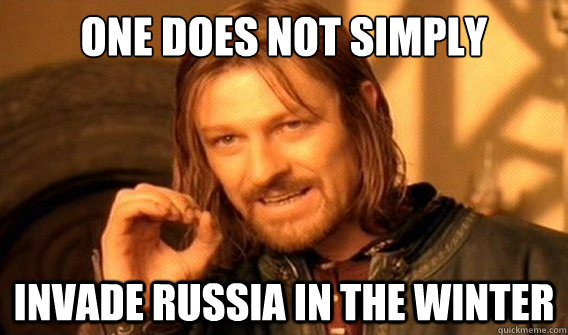
Charles eventually invaded Russia (1708), but Peter used:
Scorched Earth tactics
Harsh winter
Deliberate retreat strategy
This led to Charles’s defeat in 1709 at Poltava — a major turning point that gave Russia dominance in the Baltic.
The Balance of Power
There are three main types of balances:
Equilibrium: Two sides are both equal and do not upset the balance because it would cause destruction. A lot of it. (Example: Cold War)
Coalition: When one state is so powerful, other countries ally to form a coalition that keeps it in check (Germany/Axis in WWII)
Tipping point: When one country that is neutral is powerful enough to tip balance, it is said to hold the balance. (US in WWII)
The five great powers at the time were:
England
France
Russia
Austria
Prussia
AUSTRIA vs. PRUSSIA: RIVALRY OF THE AGE
Who will unify Germany? Austria or Prussia?
Both made deals with nobles saying “you’re the boss on local level but you give us money and recognize us on a national level.” Different from France’s intendants or England because eastern Europe still has serfs.
Wars of the mid-eighteenth century:
War of the Austrian Succession (1740-1748)
Maria Theresa used Hungarian troops and Britain’s financial help to fight her opponents to a stalemate. Besides Frederick’s conquest of Silesia, no major territorial changes. Even England and France, who fought mainly overseas, it was a standoff. Austria was determined to recapture Silesia and humiliate Prussia.
Prussian king was practical and irreligious but Theresa was moralistic and pious– very traditional ruling style but had a shrewd policy when it came to business and asserting the power of her state
Strong regard for her dynasty and believed in divine mission of Habsburg
England + Austria versus France + Prussia with England as balance of power. France was really after the Austrian Netherlands. Also, between England and France, who gets Canada? (overseas warfare)
Diplomatic Revolution of 1756: Maria Theresa’s foreign minister, Count Kaunitz, notices that the French don’t really have an incentive to fight the Hapsburgs– strikes a deal saying that if France helps Austria reclaim Silesia, you can get the Austrian Netherlands
Seven Years War (1756-1763)
Austria, Russia, and France vs. Prussia and England
Russia conquers a ton of land, and Berlin (capital of Prussia) is about to fall
Prussia tries to compensate for vulnerability by signing a treaty with England in 1756, the Convention of Westminster, and the French saw this as betrayal
Empress Elizabeth of Russia dies with no kids in 1762, so her nephew Peter III takes over and hero-worships Frederick of Prussia. Frederick sends a small regiment to Peter. Peter orders a cease-fire and forces Russian soldiers to turn around on the eve of victory — the Miracle of the House of Brandenburg
Peace of Hubertusberg (1763): Prussia returned Saxony to Austria but paid no compensation for the devastation of the duchy; Austrians recognized Silesia as Prussian
Notice how England always opposes France to keep the balance of power, and Austria is always against Prussia. The real keeper of European balance is Russia.
Russia, Prussia, and Austria feast on the remains of Poland and carve it up. Poland elects a king but has a Diet of nobles who require unanimous consent to pass legislation. Russia pays a few nobles to veto, and by 1795, Poland disappears.
Alternatives to Absolutism
Opponents of absolutism preferred constitutionalism.
United Provinces
Succession of William III to office of Stadholder in 1672 seemed to move toward absolutism. He concentrated government in his own hands but the power of merchants and provincial leaders in the Estates General stopped him and ended the war with Louis XIV.
Sweden
Charles XI (r. 1660-1697) was able to force nobles to hand over land back to the monarch. Because of Charles XII’s absence from the court (he was engaged in a ton of warfare), nobles took the chance to revamp the court by forcing Queen Ulrika, his successor, to give Riksdag control over the country.
Poland
There were highly capable kings such as John III who played a role in the Turkish siege of 1863, but later on Poland just disappeared from the map. The nobility kept restricting the power over the monarchy, despite a central diet (and the fact that the diet required unanimous consent to pass anything), leaving it vulnerable to stronger nations.
NOTES / ESSAY TOPICS
Is Louis XIV a success or failure? Is Peter the Great a success or failure? How are they similar?
Louis XIV: Success on the whole because of his ability to centralize power and come close to absolute monarch (personal success, not necessarily for his reign).
Domestication of aristocracy
Knew how to handle advisors
Envy of Europe
Peter the Great: Also success
Westernization
Strengthened army
Creation of bureaucracy
Similarities: Centralized government, similar childhood experiences (Fronde/Streltsy), treatment of peasants, strong armies, relocation of court
Differences: Peter had better foreign policy and a more involved army
Units
- Preface
- Pre-Renaissance
- The Renaissance & Reformation
- Wars of Religion, New Monarchs, 17th C England
- Scientific Revolution, Art, Locke & Rousseau
- Absolutism, European Balance of Power
- The Enlightenment, New Economics, Cultural Change
- The French Revolution & Reign of Terror
- Napoleonic Era, Congress of Vienna, Concert of Europe
- Age of Metternich, Nineteenth Century
- Threat of Knowledge & WWI
- Interwar Period, and WWII to post-Cold War
Latest Updates
Thanks for using AP Euro Guide.
Keeping a website up and running is not free for us. Many hours of work were put into creating the guide, as well as setting up and funding this website. Consider donating a dollar to keep our guide available and online. Go to our homepage, and click on the “Donate” button.